

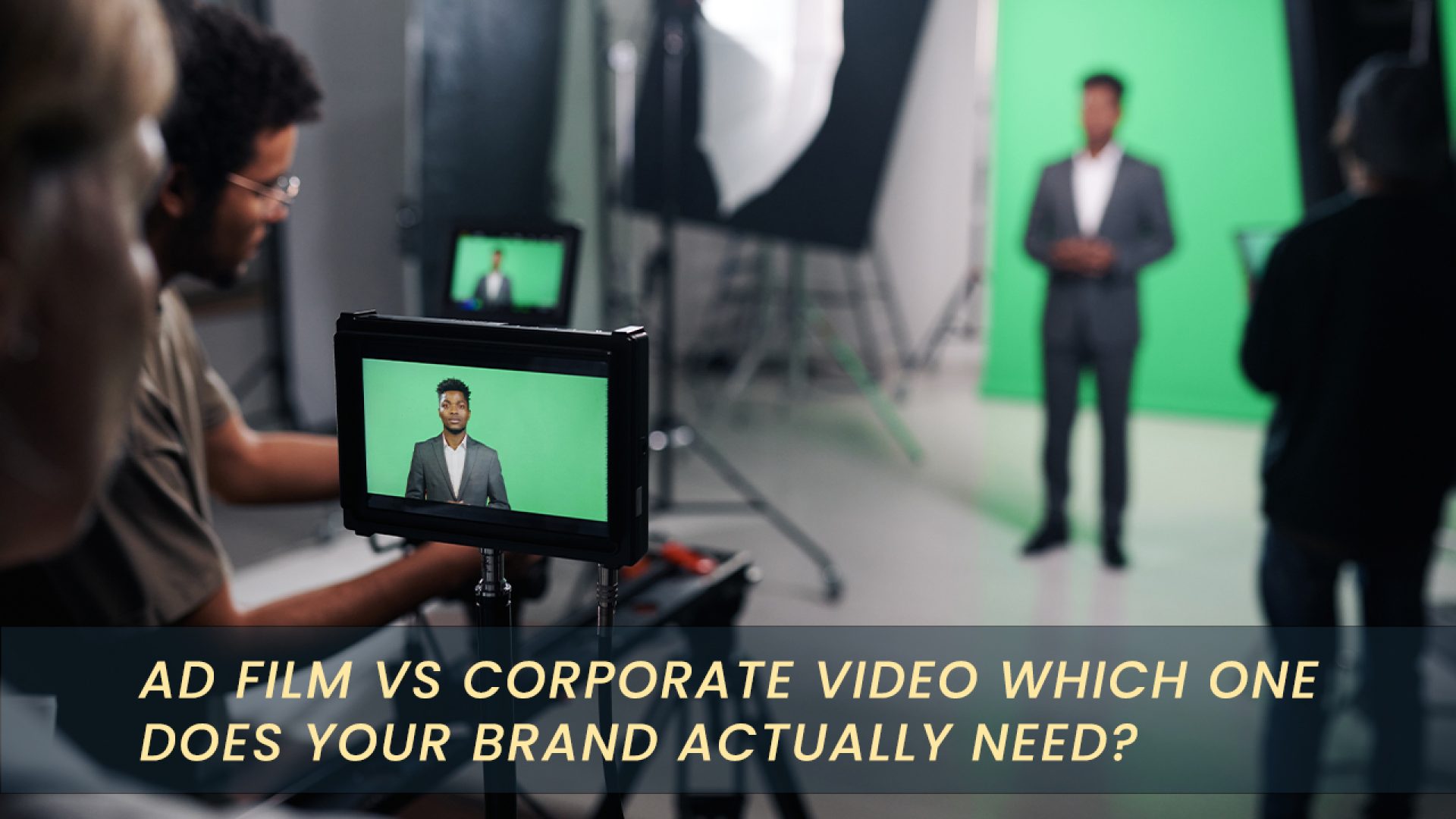
Ad Film vs Corporate Video – the two terms get thrown around interchangeably, and that mix-up costs businesses time, budget, and results. You brief an agency expecting a punchy, emotion-driven ad, and instead get a polished but flat company overview. Or worse, you invest in a cinematic ad film when what your audience actually needed was a clear, trust-building corporate story. The confusion isn’t just semantic; it shapes your messaging, your budget, and how your audience responds.
So how do you know which one your brand actually needs? Understanding the core differences in purpose, tone, length, and platform is the first step to making a smarter creative decision. In this blog, we break down exactly what separates an ad film from a corporate video, so your next production hits the right mark.
Ad Film vs Corporate Video: 7 Key Differences
Both formats fall under “business video,” but they’re built for opposite jobs. An ad film exists to sell – fast, loud, and emotional. A corporate video exists to build trust – slower, informative, and credibility-driven. Confusing the two usually means you either oversell in a context that needed sincerity, or bore an audience that wanted excitement. Below are the seven differences that actually matter when you’re briefing a production team or picking a budget.
1. Purpose & Objective
- Ad films exist to drive an immediate action – a purchase, a sign-up, a click.
- Corporate videos exist to build long-term trust with stakeholders, employees, or investors.
- Ad films are campaign-driven; corporate videos are brand-driven and evergreen.
Wyzowl’s 2026 survey found 85% of people have been convinced to buy something after watching a video, which is why ad films lean so heavily on persuasion over information.
2. Target Audience
Ad films target end consumers – the people who’ll actually buy the product. Corporate videos target a mixed audience: employees, partners, investors, clients, and sometimes regulators. This changes everything about tone, because you’re not selling to an investor the same way you sell a soft drink to a teenager scrolling Instagram.
3. Tone and Storytelling Style
Ad films use punchy, emotional, often humorous storytelling with a hook in the first few seconds. Corporate videos use a calmer, factual, narrative-driven tone that builds credibility over time rather than triggering an impulse. Nearly half of an ad’s value is built in the first three seconds, so ad films front-load their hook; corporate videos don’t need to.
4. Length and Format
Ad films are short – usually 15 to 60 seconds, optimized for skip-proof attention spans. Corporate videos run longer, often 2 to 10 minutes, since they need to explain, not just excite. Wistia’s data shows most viewers finish a video under one minute, which is exactly why ad films stay tight while corporate content earns extra runtime through relevance, not entertainment.
5. Distribution Platforms
Ad films live on TV, YouTube pre-rolls, Instagram Reels, and paid social. Corporate videos live on company websites, LinkedIn, investor decks, and internal onboarding portals. Eight in ten B2B teams name LinkedIn their primary video channel – a platform ad films rarely prioritize.
6. Budget and Production Approach
Ad films demand higher production value actors, locations, VFX, and heavy post-production because they compete for attention in crowded feeds. Corporate videos are often leaner: interviews, screen recordings, and office B-roll, since the goal is authenticity over spectacle.
7. Measuring Success (KPIs)
- Ad film: click-through rate (CTR), conversions, reach
- Corporate video: engagement time, trust signals, brand recall
82% of marketers report good ROI from video overall, but how that ROI is measured differs completely by format sales lift for ad films, sentiment and retention for corporate ones.
When Should a Business Choose an Ad Film Over a Corporate Video?

The honest answer: it depends on what stage your business is in and who you’re talking to. If you need people to act now, go with an ad film. If you need people to trust you over time, corporate video wins. Most growing brands eventually need both, just for different campaigns and different audiences.
Scenarios Favouring an Ad Film
Choose an ad film when the goal is short-term conversion or visibility.
- Product launches needing quick market buzz
- Seasonal or festive sales campaigns
- Flash promotions or limited-time offers
- Awareness pushes for a new service line
These work because ad films are built for scroll-stopping impact, not deep explanation perfect when time is limited and competition for attention is high.
Scenarios Favouring a Corporate Video
Choose a corporate video when the goal is credibility, not conversion.
- Brand credibility and reputation building
- Employee onboarding and training content
- Investor communication and annual updates
- About Us or company culture pages
These formats work over months, not seconds, they’re judged on trust and retention, not click-through numbers.
FAQs
- What’s the main difference between an ad film and a corporate video?
An ad film is built to sell a product or service within a short, high-impact format. A corporate video focuses on building brand trust, culture, and long-term credibility. The core difference lies in intent, persuasion versus information. - Which is more expensive to produce?
Ad films typically cost more due to high production value, casting, and tight storytelling. Every second is optimized for impact, which increases shoot and edit costs. Corporate videos are more budget-friendly since they prioritize clarity over spectacle. - Can a business use both formats together?
Yes, most brands use both formats as part of a complete video strategy. Ad films drive campaigns, launches, and conversions across paid platforms. Corporate videos support the website, investor decks, and long-term brand positioning. - Which format works better for social media?
Ad films perform better on Instagram, YouTube Shorts, and paid social due to their fast pacing. Their short runtime and emotional hooks are built for scroll-stopping engagement. Corporate videos work better on owned platforms like websites and LinkedIn. - Do corporate videos help with SEO?
Yes, corporate videos improve on-page SEO by increasing website dwell time. Search engines associate longer engagement with valuable, trustworthy content. Embedding these videos on key landing pages also boosts organic visibility. - How do I measure success for each format?
For ad films, track CTR, conversions, and cost-per-acquisition across campaigns. For corporate videos, measure average watch time, engagement rate, and brand recall. Together, these metrics show both short-term performance and long-term brand impact.
Conclusion
Ad films and corporate videos aren’t competitors, they’re two tools for two different jobs. Ad films sell, corporate videos build belief. Get the purpose wrong, and even a beautifully shot video underperforms. The smartest brands map their content calendar around both: ad films for campaigns that need speed, corporate videos for relationships that need time. Know your goal first, then pick your format, not the other way around.
Start by asking what the viewer should think, feel, or do after watching. If the answer is “buy now,” go with an ad film; if it’s “trust us,” go with a corporate video. A good video production company will help you plan both around your audience, budget, and timeline.
Ready to choose the right format for your brand? Explore our video production services or talk to our team to plan your next video.

