


B2B leads are getting harder to convert, even when your pipeline looks full on paper. Sales teams open their CRM every morning to a fresh batch of contacts, yet half of them never respond, and the ones who do rarely turn into real deals. This isn’t a lead volume problem. It’s a lead quality problem. Buyers today research on their own terms, compare vendors quietly, and only reach out once they’ve already formed an opinion about who deserves their time. Meanwhile, most companies are still generating leads the same way they did five years ago: generic forms, one-size-fits-all outreach, and content that answers nobody’s actual question. The result is a pipeline full of names but short on real opportunities. Fixing this doesn’t mean working harder or spending more on ads. It means rethinking how leads are attracted, qualified, and nurtured from the very first touchpoint. This guide walks through exactly how to build a B2B lead generation approach that brings in people who are genuinely ready to buy not just ready to click.
Why B2B Lead Generation Matters in 2026
Lead generation isn’t just a marketing task anymore it’s the difference between a full pipeline and a stalled one. As buying behaviour shifts, companies that adapt their approach are the ones filling their calendars with real conversations.
The Changing B2B Buyer Journey
Buyers now do most of their research before ever speaking to sales. They compare vendors, read reviews, and form opinions long before a demo call happens. If your brand isn’t visible during that research phase, you’re not even in the running.
The Rising Cost of Poor Lead Generation
Chasing unqualified leads wastes sales hours and inflates your cost per acquisition. Every mismatched lead in the pipeline slows down reps and skews forecasting. Fixing lead quality upfront saves far more than any ad budget increase.
How AI Search Is Reshaping Vendor Discovery
Buyers increasingly ask AI tools to shortlist vendors instead of scrolling search results themselves. If your content isn’t structured to be understood and cited by these tools, you risk disappearing from consideration entirely even with great products.
Proven Strategies to Generate High-Quality B2B Leads
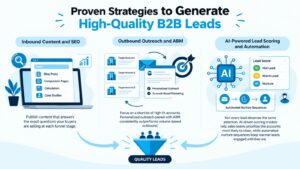
Once you understand why old tactics fail, the fix becomes clear: combine inbound authority, targeted outbound, and smart automation instead of relying on just one channel.
Inbound Content and SEO
Publish content that answers the exact questions your buyers are asking at each funnel stage. Comparison pages, calculators, and case studies attract intent-driven traffic that converts far better than generic blog posts ever will.
Outbound Outreach and ABM
Instead of blasting hundreds of cold emails, focus on a shortlist of high-fit accounts. Personalized outreach paired with account-based marketing consistently outperforms volume-based outbound, because it speaks directly to a buyer’s actual situation.
AI-Powered Lead Scoring and Automation
Not every lead deserves the same attention. AI-driven scoring models help sales teams prioritize the accounts most likely to close, while automated nurture sequences keep warmer, not-yet-ready leads engaged until they are.
FAQ’s
- What is the fastest way to generate B2B leads?
Targeted outbound to a well-defined ideal customer profile delivers the fastest measurable results. Pairing outbound with a strong lead magnet captures inbound interest at the same time. This dual approach shortens the time between first contact and a qualified conversation. Speed in B2B lead generation comes from focus on the right accounts, not from increasing outreach volume. - How much does a B2B lead cost on average?
B2B lead cost varies by industry, channel, and targeting precision, typically ranging from $30 to $500 per lead. Inbound leads generated through content and SEO are usually cheaper over time than paid outbound campaigns. Poorly targeted campaigns increase cost per lead by attracting unqualified contacts. Improving audience targeting is the single biggest lever for reducing overall lead generation cost. - Is cold email still effective for B2B leads in 2026?
Cold email remains effective in 2026 when it is personalized and sent to a narrow, well-researched list. Generic, mass-sent emails are now filtered by spam systems or ignored outright by recipients. Effectiveness depends on relevance to the recipient’s role, industry, and current business challenges. Well-targeted cold email still outperforms broad outbound campaigns in response and conversion rates. - What’s the difference between an MQL and an SQL?
An MQL, or marketing qualified lead, is a contact who has shown interest through actions like downloading content or attending a webinar. An SQL, or sales qualified lead, has been vetted by the sales team as ready for a direct conversation. The distinction determines who owns the lead and what outreach approach is appropriate. Moving leads through this stage correctly prevents sales teams from wasting time on unready prospects. - How does AI affect B2B lead generation?
AI affects B2B lead generation on both the buyer and seller side of the process. Buyers now use AI tools to research vendors and build shortlists before any direct contact occurs. Sellers use AI for lead scoring, predictive analytics, and automated nurture sequences at scale. Companies that ignore AI on either side risk losing visibility and efficiency compared to competitors who adopt it. - How long does it take to see results from lead generation efforts?
Results from B2B lead generation vary by channel and typically fall into two timelines. Outbound and paid campaigns can produce responses and meetings within two to four weeks. Inbound and SEO-driven lead generation usually take three to six months to build meaningful traction. Combining both approaches provides short-term pipeline activity while long-term organic growth compounds in the background.
Conclusion
Generating B2B leads in 2026 isn’t about doing more, it’s about doing the right things well. Buyers have changed how they research and decide, and your lead generation strategy needs to meet them where they already are. Blend inbound content that builds trust, outbound outreach that feels personal, and automation that prioritizes the right accounts, and your pipeline stops depending on luck. Start with one channel, measure what actually converts, and build from there.
Map each channel to what your buyer is searching for at every stage, from the first question to the final demo request. Track pipeline metrics like cost per qualified lead, sales-accepted leads, and revenue per channel, not just clicks and form fills. The best B2B lead generation feels helpful at every touchpoint, so prospects reach out to you before your competitors.
Ready to build a pipeline you can count on? Explore our B2B lead generation services to get started.

