

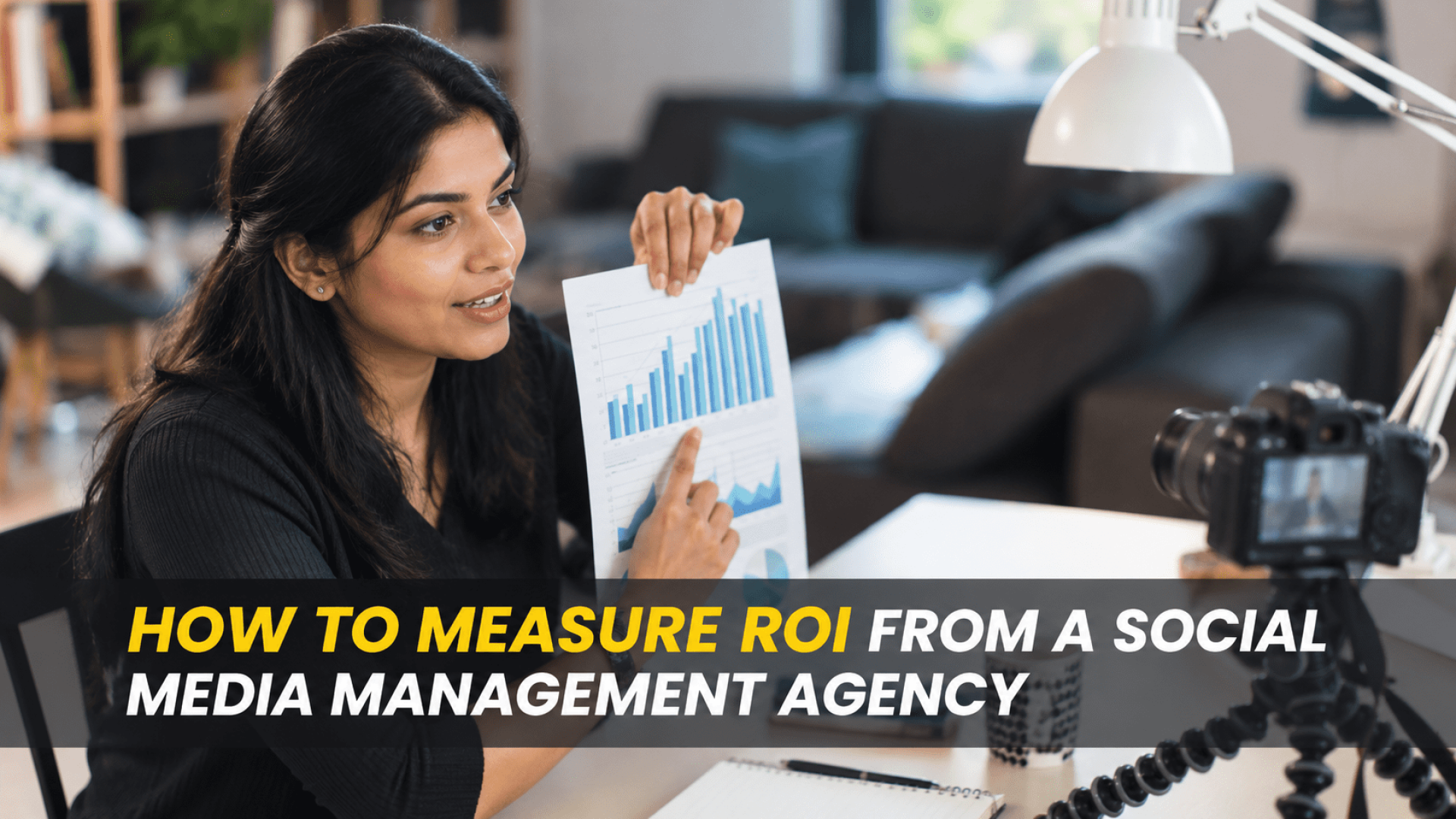
Social Media Management Agency three words business owners search when their posts aren’t converting, their inbox is empty despite “great engagement,” and they’re not sure if their marketing dollars are working at all. Sound familiar? You’re not alone: most brands post consistently, hire help, and still can’t answer one simple question, is this actually growing revenue? The problem isn’t effort; its strategy. A scattered content calendar and vanity metrics won’t fill your pipeline. What will? A social media management agency that treats your business goals as the metric that matters, not just likes and follower counts. In this guide, we’ll break down what a real agency partnership should look like, the systems, the reporting, and the results that justify every dollar spent, so you stop guessing and start seeing measurable growth.
What Does ROI Actually Mean When You Hire a Social Media Management Agency?
Before you can measure anything, you need a shared definition. Otherwise, “success” becomes whatever the agency decides to highlight that month.
The ROI Formula for Social Media
The basic formula is simple: (Revenue Generated − Cost of Agency) ÷ Cost of Agency × 100. If you spent $3,000 on management fees and generated $9,000 in attributable revenue, your ROI is 200%. This formula only works, though, if you’re tracking revenue that’s genuinely tied to social not just guessing.
Why Followers and Likes Aren’t ROI
Growing your follower count feels good, but it doesn’t pay bills. A page can double its followers and still generate zero leads if the audience isn’t the right fit or the content never pushes toward a conversion. Engagement is a signal, not a result, treat it as a leading indicator, never the finish line.
Hard ROI vs. Soft ROI
Not everything valuable shows up as direct revenue. Hard ROI is measurable: sales, leads, signed contracts. Soft ROI is real but harder to price brand trust, customer sentiment, share of voice against competitors. A good agency should report both, but hard ROI is what justifies the invoice.
How to Calculate ROI From Your Agency’s Work (Step-by-Step)
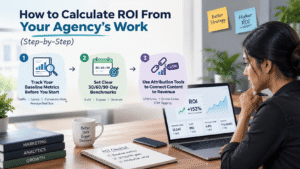
Once you agree on definitions, the actual math becomes straightforward if you set it up correctly from day one.
Track Your Baseline Metrics Before You Start
You can’t prove improvement without knowing where you started. Before the agency takes over, record your current traffic, lead volume, conversion rate, and average deal size. Skip this step, and every future report becomes a matter of opinion instead of comparison.
Set Clear 30/60/90-Day Benchmarks
Break your goals into short, measurable checkpoints. Maybe month one is about audience building, month two is about engagement quality, and month three is about lead volume. This turns a vague six-month “wait and see” into something you can actually evaluate along the way.
Use Attribution Tools to Connect Content to Revenue
This is where most businesses fall short. Use UTM-tagged links, unique promo codes, or CRM source tagging so every lead is traced back to a specific post, campaign, or platform. Without this, you’re left assuming social media “helped somehow” which isn’t a metric, it’s a hope.
FAQs
- What is a good ROI for social media management?
Most businesses aim for at least a 100–200% return, though this varies by industry. E-commerce and lead-gen businesses often see faster, more measurable returns. Anything below break-even after 3–6 months is worth a serious conversation with your agency. - How do you calculate ROI on social media marketing?
Subtract your total spend from the revenue generated through social channels, then divide that number by your spend. Multiply by 100 to get a percentage. The accuracy of this depends entirely on how well you’re tracking attribution. - How much should a social media management agency cost?
Costs typically range from $500 to $10,000+ per month depending on scope, platform count, and whether paid ads are included. Smaller businesses often pay 1,000–3,000 for solid, consistent management. Always compare cost against the ROI it’s expected to generate, not the price tag alone. - Can you measure ROI from organic social media alone?
Yes, though it’s harder than paid campaigns since there’s no direct ad spend to compare against. Look at branded search increases, direct website traffic, and lead source tagging instead. It takes more patience, but the data is still trackable. - How soon should I expect results from a social media agency?
Organic growth typically takes 3–6 months to show meaningful business impact. Paid social ads can show results within 30–90 days if targeting is accurate. Anyone promising overnight ROI is likely inflating vanity metrics instead of real outcomes. - What’s the difference between engagement and ROI?
Engagement measures interaction – likes, comments, shares and reflects how people respond to content. ROI measures business outcomes like leads, sales, or revenue tied directly to that activity. High engagement with zero conversions means your content is entertaining, not profitable.
Conclusion
Measuring ROI from a social media management agency isn’t about drowning in dashboards. It’s about asking the right question from the start: is this activity making the business money, directly or indirectly? Define your ROI formula, ignore vanity metrics, and track attribution from day one. Do that, and you’ll always know whether your agency is earning its fee or just staying busy.
Focus on metrics tied to business outcomes: leads, conversions, cost per acquisition, and revenue from social traffic. Set clear goals and reporting rhythms with your agency before the first post goes live, so every campaign can be judged against them. The right partner shows you what worked, what didn’t, and what they’ll change next month.
Want to see real returns from your social channels? Explore our social media marketing services to build a measurable plan.

