

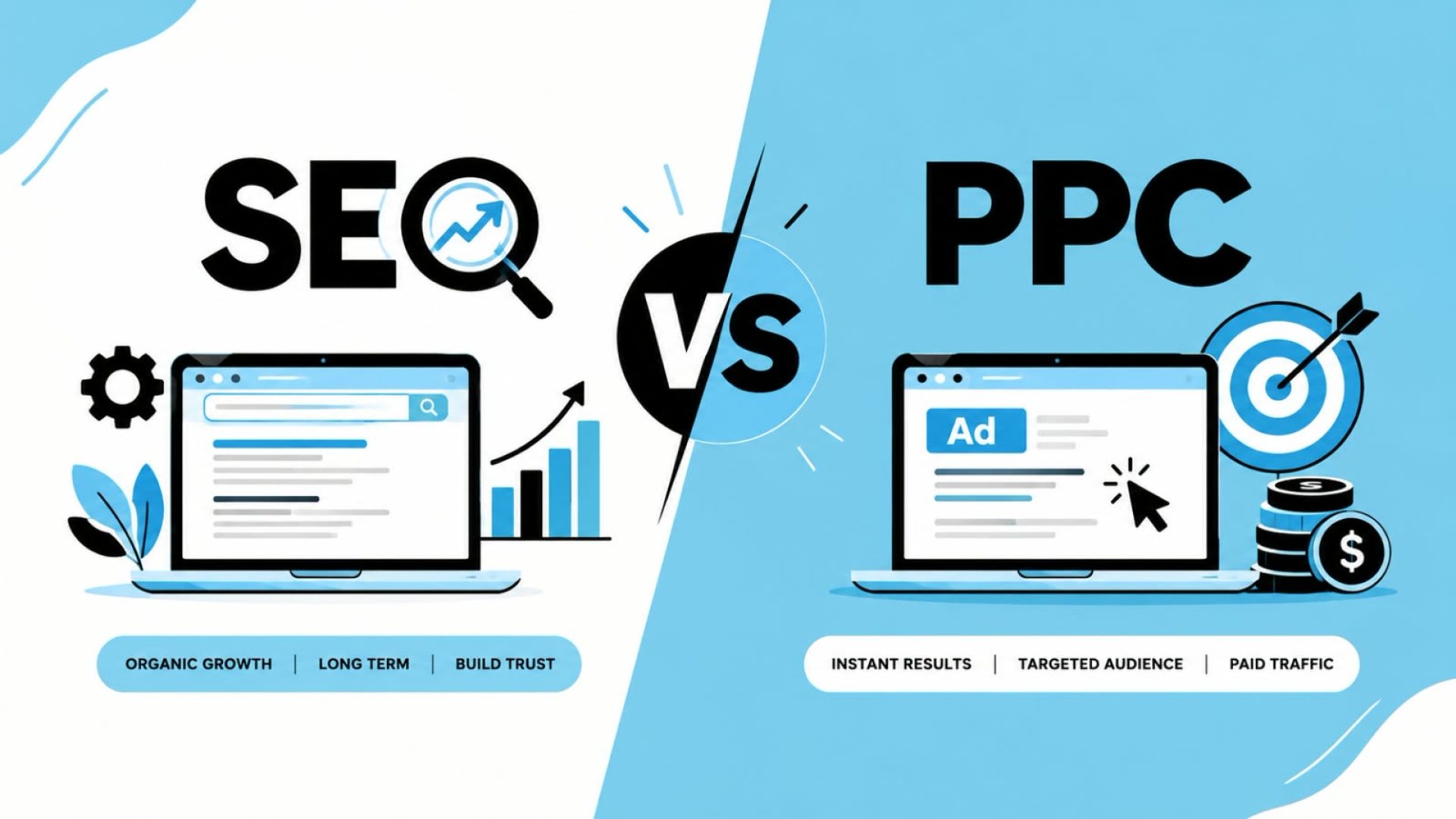
SEO vs PPC: which one deserves your marketing budget first? Every business owner runs into this fork in the road, and getting it wrong means wasted spend and stalled growth. Here’s the tension: PPC averages roughly £2 returned for every £1 spent, delivering traffic the moment you switch it on but stop paying, and the clicks vanish overnight. SEO plays a longer game; it delivers a median ROI of 748%, generating $22 in returns for every $1 invested, with results that compound rather than disappear. Neither is “better” in a vacuum, they solve different problems at different speeds, and most businesses need to know exactly when to lean on each one.
Maybe you need leads by Friday, or maybe you’re building something that still pays off three years from now. Either way, guessing isn’t a strategy. So which channel actually fits your goals, timeline, and budget? This blog breaks down the real differences in cost, speed, longevity so you can build one that works for where your business stands today, not just next quarter.
SEO vs PPC: Head-to-Head Comparison
Cost & Investment
PPC has a direct, visible cost you pay per click, and that spend stops delivering traffic the second your budget runs out. SEO has upfront costs too (content, technical work, sometimes an agency), but once a page ranks well, it can keep generating traffic for months or years without extra spend per visitor. Over a long enough timeline, SEO often works out cheaper per lead but it takes patience to get there.
Speed to Results
This is where PPC wins outright. Launch a campaign today, and you can be on page one within hours. SEO, by contrast, usually takes three to six months (sometimes longer, depending on competition) before you see meaningful movement. If you need sales this week for a product launch, a seasonal sale PPC is the realistic option.
Long-Term Value & Sustainability
SEO’s real strength shows up over time. A well-ranked blog post or landing page keeps attracting visitors long after you’ve published it, and each new piece of content adds to your site’s overall authority. PPC traffic, meanwhile, is rented, not owned the moment you pause your campaigns, that visibility disappears completely. If you’re building something for the long haul, SEO compounds in a way paid ads simply can’t.
| Factor | SEO | PPC |
| Cost structure | Upfront investment (content, technical work); no per-click charge | Pay per click; cost scales with traffic |
| Speed to results | 3–6+ months to see movement | Instant — live within hours |
| Traffic after you stop | Keeps generating traffic long-term | Stops immediately when budget ends |
| Trust & credibility | Higher perceived trust (organic results) | Seen as an ad, slightly lower trust |
| Best for | Long-term brand building, evergreen content | Launches, promotions, urgent sales goals |
| Control & testing | Slower to test and adjust | Fast A/B testing, instant tweaks |
| Long-term ROI | Compounds over time | Resets with every budget cycle |
Which One Should You Choose?
When SEO Makes Sense
If you’re playing the long game building a brand, a content library, or a business you plan to run for years, SEO is worth the investment. It’s also the better fit if your budget is limited but you have time to invest in content and technical groundwork, since you’re not paying for every visitor individually.
When PPC Makes Sense
PPC shines when timing matters more than budget efficiency. Launching a new product, running a limited-time promotion, or testing which messaging converts before committing to a bigger content strategy these are all scenarios where paid ads deliver answers fast. It’s also useful for highly competitive keywords where ranking organically could take years.
Combining SEO and PPC
The smartest approach for most businesses isn’t choosing one, it’s using both strategically. Run PPC campaigns to identify which keywords and ad copy actually convert, then feed those insights into your SEO content strategy. Meanwhile, strong organic content can lower your PPC costs indirectly, since Google rewards relevant, high-quality landing pages with better Quality Scores and cheaper clicks. Used together, SEO and PPC cover each other’s weaknesses instant visibility from ads, lasting value from organic growth.
FAQ
- Is SEO cheaper than PPC in the long run?
Yes, SEO is generally cheaper over time. It requires upfront investment in content and technical optimization, but there’s no per-click charge once a page ranks. PPC costs scale directly with traffic, so over a year or more, SEO typically costs less per visitor acquired. - Can I do SEO and PPC at the same time?
Yes, running SEO and PPC together is a common and effective strategy. PPC fills the traffic gap while your organic rankings build momentum in the background. The two channels can also share keyword and conversion data, making each one stronger. - How long does SEO take to show results compared to PPC?
PPC delivers traffic within hours of launching a campaign, while SEO takes considerably longer. Most SEO efforts show noticeable ranking improvements within three to six months. The exact timeline depends on keyword competition, domain authority, and content quality. - Which converts better, SEO or PPC?
Conversion rates vary by industry, but organic search results generally earn more trust from users. This often translates to slightly higher click-through rates for SEO-driven traffic. PPC can convert just as well when paired with precise audience targeting and strong ad copy. - Does running PPC ads help my SEO rankings?
No, Google Ads spend does not directly influence organic SEO rankings. Google has confirmed that ad campaigns are not a ranking factor for organic results. However, PPC data reveals which keywords convert, helping prioritize which topics to target in your SEO strategy. - Should start-ups start with SEO or PPC first?
The right starting point depends on the start-up’s cash runway. If speed and quick validation matter most, PPC delivers faster, measurable results. If the start-up can wait three to six months, starting SEO early lets its benefits compound sooner.
Conclusion
There’s no universal winner in the SEO vs PPC debate, only what’s right for where your business is right now. If you need traffic today, PPC gets you there. If you’re building something that should still be paying off a year from now, SEO is the better long-term bet. And if you can manage both, even a modest amount of each, you’ll get the fast wins of paid ads while your organic presence quietly builds in the background. Start with your timeline and budget, be honest about how much patience you have, and let that decide the mix, not a general rule about which channel is “better.”
Track what matters for each channel: cost per lead for PPC, and rankings, organic traffic, and conversions for SEO. Use your paid search data to find the keywords that convert, then build SEO-friendly content around them to lower your ad spend over time. The best strategy matches search intent at every stage, from the first click to the final enquiry.
Not sure which mix fits your budget? Explore our digital marketing services to build a plan around your goals.

